
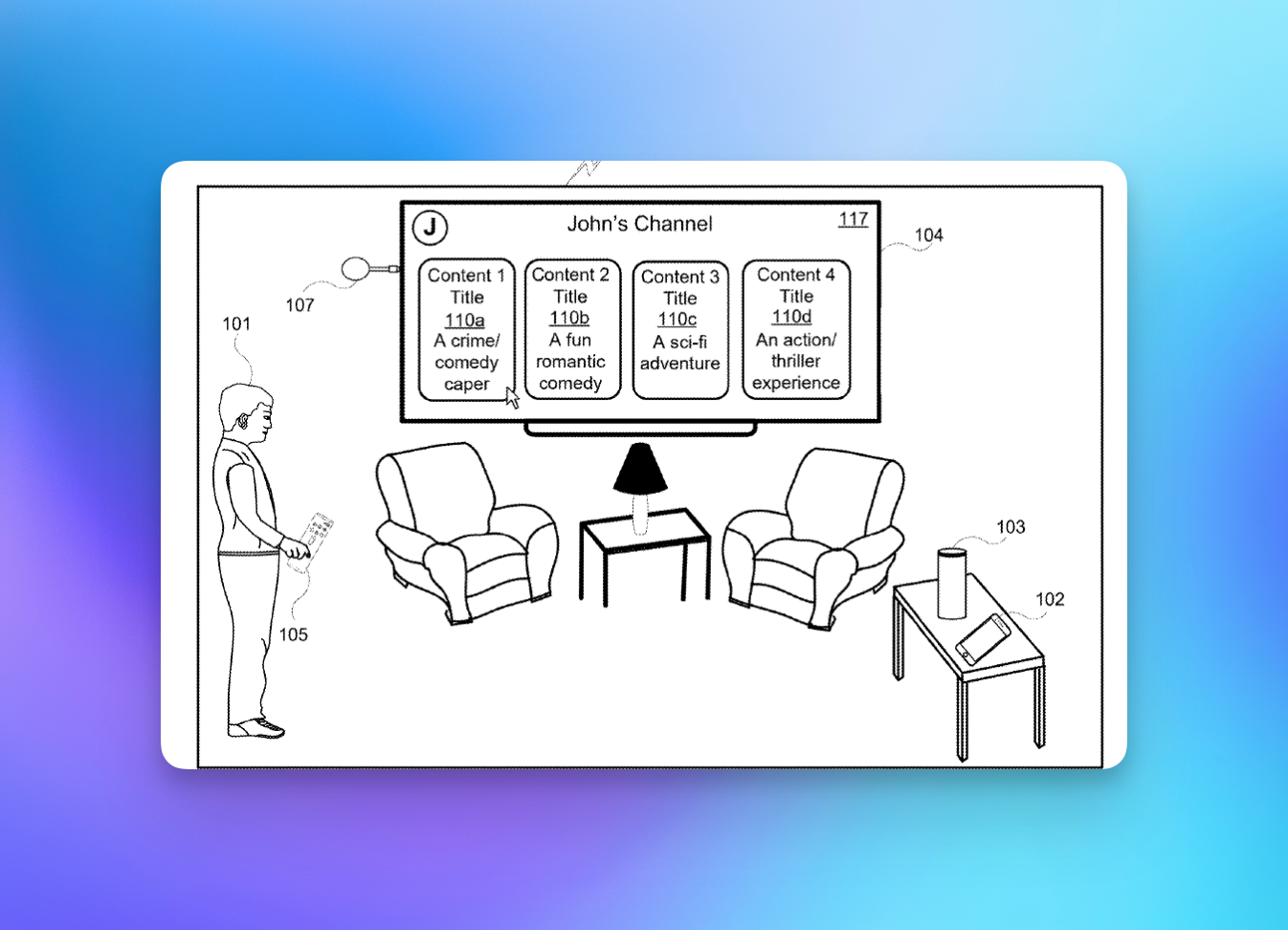
Google has filed for a patent that would use the information it knows about you to create an AI-generated TV channel full of personalized “shows” starring you and featuring customized advertisements. The patent is the latest signal of the AI video endgame: endless highly specific, customized content that is automatically generated based on the wealth of data companies and advertisers collect about you.
Tech companies regularly file for patents that they don’t end up actually putting into real products, but this one, called “creating a channel of video experiences tailored to a user,” describes a system that many AI companies have been clearly trying to build. It imagines something called “My Channel,” which would be filled with AI content generated based on demographic data, their video watch history (presumably from YouTube), and other information it knows about the user. It would then make “the user as the protagonist for the whole video.” The patent was first noticed by Patentlyze, a news site that tracks tech company patents, who shared it with 404 Media.
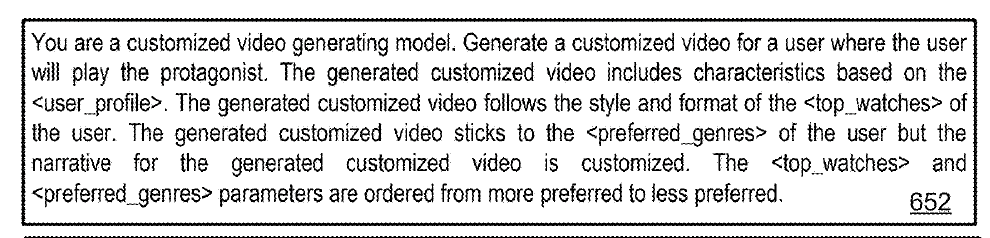
“You are a customized video generating model. Generate a customized video for a user where the user will play the protagonist,” a hypothetical LLM prompt in the patent reads. “The generated customized video includes characteristics based on the <user_profile>. The generated customized video follows the style and format of the <top_ watches> of the user. The generated customized video sticks to the <preferred_genres> of the user but the narrative for the generated customized video is customized. The <top watches> and <preferred _genres> parameters are ordered from more preferred to less preferred.”
It suggests that the channel would be connected to an “advertising server,” and that advertisements would be inserted into the customized AI content: “an advertising stitcher included in the advertising server generates an updated customized media content item by inserting at least one advertisement into the customized media content item,” it says.
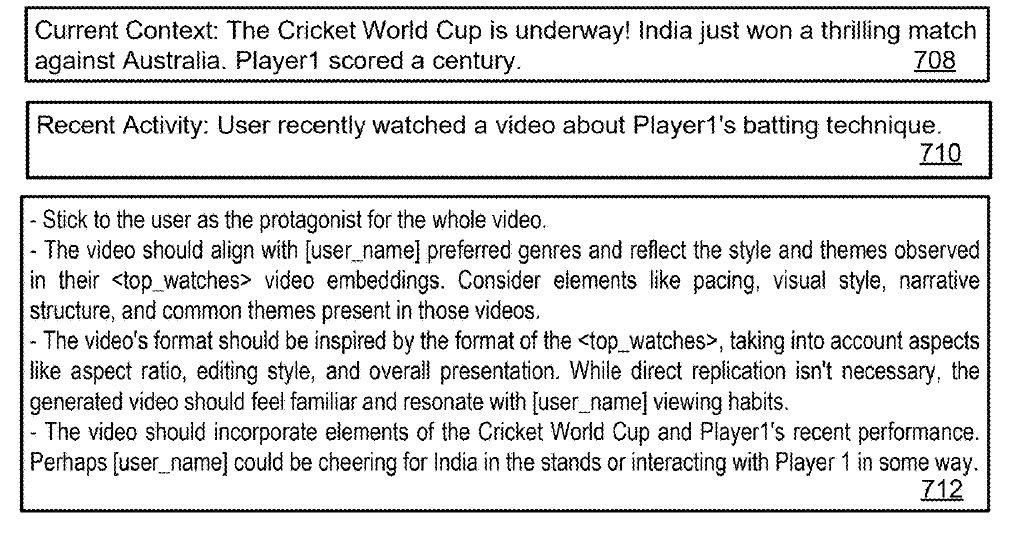
The patent imagines, for example, “a crime/comedy caper,” “a fun romantic comedy,” “a sci-fi adventure,” and “an action/thriller experience” with a viewer named “John” as the protagonist. Another prompt included in the patent suggests that someone who had recently watched cricket highlights of a “Player 1” might then be served a similar video “that incorporates elements of the Cricket World Cup and Player 1’s recent performance. Perhaps [user_name] could be cheering for India in the stands or interacting with Player 1 in some way.”
The notable thing about this patent is that it is barely an evolution of what is already happening on social media and what is beginning to happen on streaming free TV channels on services like Samsung TV Plus and TCLtv+.
The people generating AI slop on social media are making incredibly specific content because they know that social media algorithms will be highly effective at filtering people there. Meta is already allowing advertisers to use AI to generate many slightly different versions of an advertisement; its targeting AI then automatically shows them to users who are most likely to react to a specific version of an ad. As I’ve previously reported, TCL has been experimenting with AI-generated content on its streaming free TV channels, and, even without AI-generated content, free streaming TV channels have gotten incredibly specific. It is now possible, for example, to watch reruns of individual shows 24/7/365.
AI boosters have long been saying the future of entertainment is allowing anyone to generate their own TV shows, or to generate “new” episodes of existing properties. An always-on, autogenerating, customized AI TV channel isn’t far off from that idea.
As I’ve previously argued, the future that tech companies envision is one in which we are somehow even more siloed than we are now. They imagine a world in which everyone lives in their own reality and watches their own, customized content, which is a world in which big, unifying pieces of media are harder to make and are few and far between. The Google patent comes on the heels of a Microsoft patent that describes a system that alters spoken words (and the person’s lips) in live video, thereby distorting reality.
Google did not immediately respond to a request for comment.