
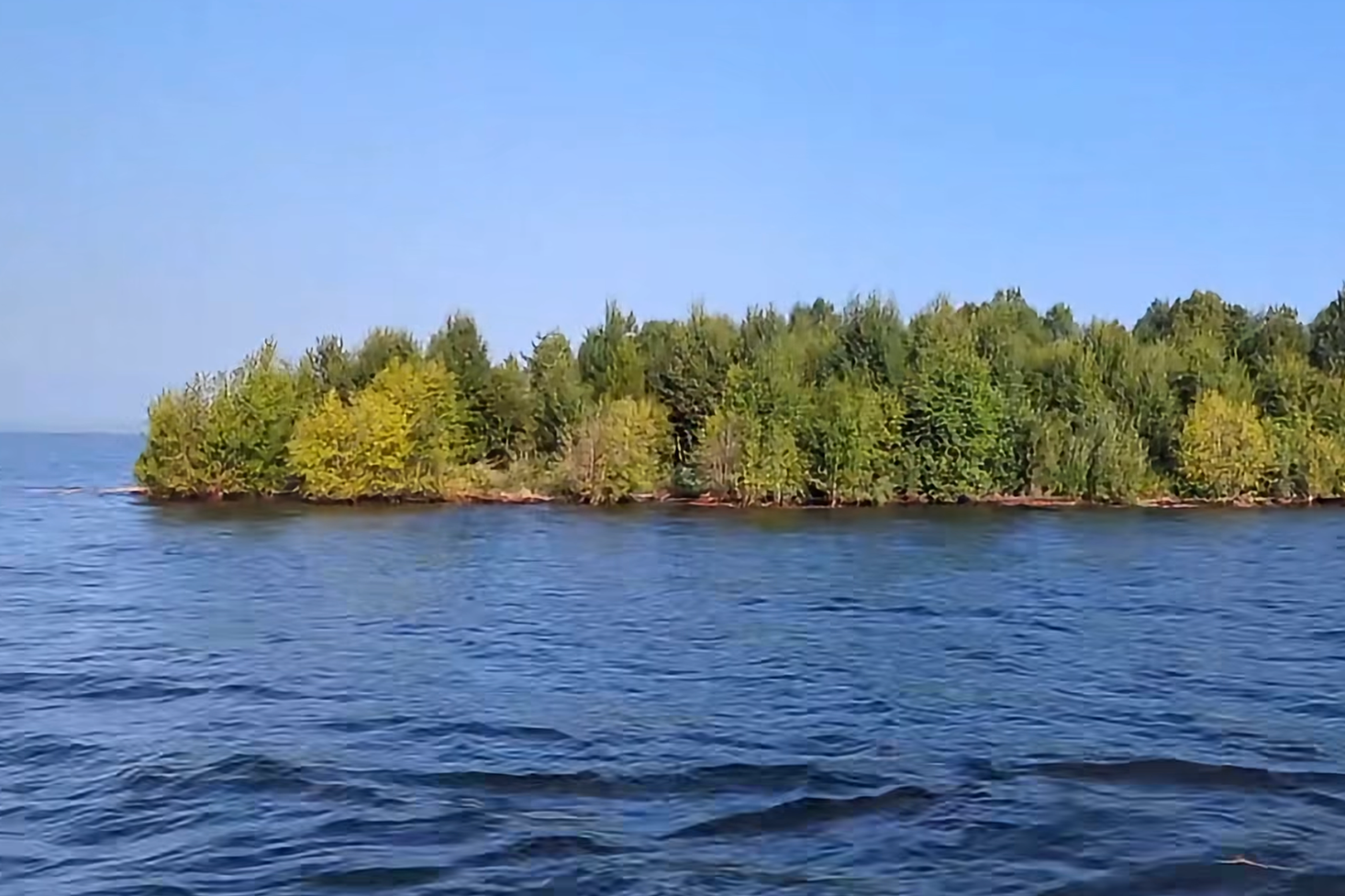
An island that appeared to suddenly materialize, then vanish, on Williston Lake in British Columbia over the summer was rediscovered on the massive reservoir on Monday.
Once you’ve taken that all in, let’s ask the important question: How the heck did that happen?
The existence of the disappearing island—a floating mass of trees and vegetation that measures about 230 feet by 460 feet—sparked international attention last month after Rocky Avery, a local resident, posted a viral video of it that was sent to him by one of his boater friends, according to CBC News.
Bob Gammer, a spokesperson for BC Hydro, was initially suspicious that the video might be AI, but confirmed it was authentic after spotting the island drifting about 60 miles west of the W.A.C. Bennett Dam in satellite images taken on July 21. In satellite images from August 5th and circulated last week, it was no longer visible, sparking a search over the past few days that led to its rediscovery about 20 miles northwest of where it had previously been spotted.
“We had some earlier satellite imagery that confirmed that this wasn't just a hoax or some kind of AI thing, and that it really was real,” Gammer told 404 Media in a call. “Since then we've had more photos from people on their boats on the water sailing right up to this island, and additional satellite imagery that puts it all together to say that this is a real thing. It’s a sizable island.”
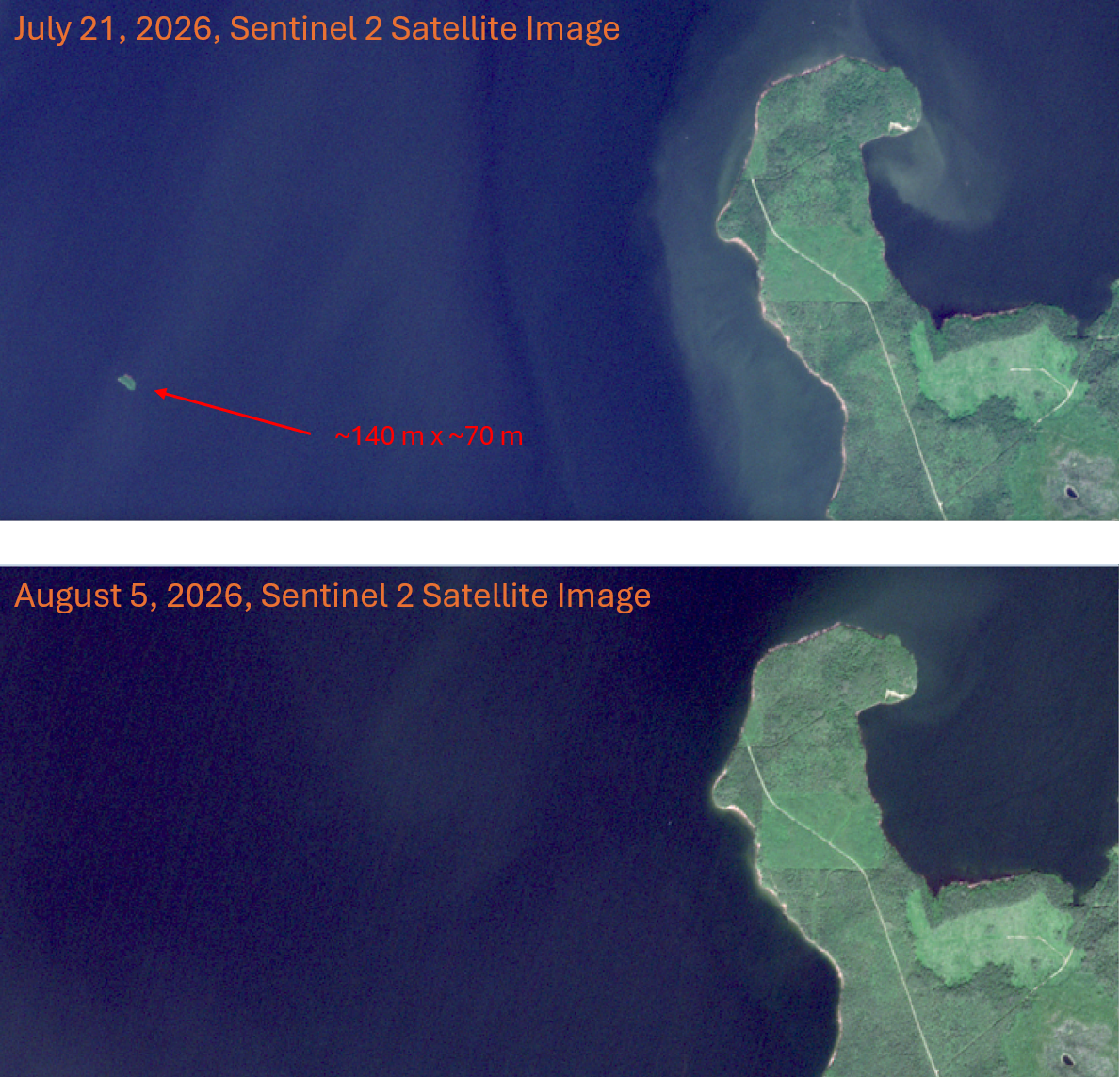
As it turns out, this isn’t a new phenomenon—though Gammer said it hasn’t been reported on Williston Lake before. Floating islands form on shorelines over many years, as natural rafts made of driftwood can allow plants and trees to grow above the water. These platforms can then detach in certain conditions, such as stormy weather or flooded shores, allowing them to meander into the water.
Williston Lake is a reservoir created by the massive W.A.C. Bennett Dam, which stands more than 600 feet high. Due to high snowpack and precipitation, the dam was opened in June and July, filling the reservoir for the first time in 14 years, according to Gammer. These high water levels, in addition to strong winds, likely dislodged the island, allowing it to float freely in the water.
“This is all brand new to us,” Gammer said. “We've never seen anything like this on the reservoir.”
BC Hydro is urging boaters to keep their distance and not to step on the island. Despite its size, the forested mass is structurally flimsy and hazardous to walk on. Other than birds, no animals have been spotted on the island. However, animals have accidentally been swept away on these natural rafts; indeed, many species have crossed oceans and reached new continents this way.
The island doesn’t pose any risk to the dam or vessels, and its journey around the lake is now being monitored by BC Hydro through satellite images and eyewitness reports. This waterborne woodland may disintegrate over time, or become reattached to the shoreline. If it survives until winter, it could be frozen into the ice and perhaps thaw out again in spring.
“It's a break from everyday reality, and so it's really captured a lot of attention,” Gammer said. “There's a lot of media interest, and it's been great to be able to tell the story. And who knows how long this will last? I mean, in terms of its news value, I'm sure it'll disappear within a few days. But the island will be there for a while. We'll be monitoring it, and if there's anything exciting about it, we may be able to tell that story too.”