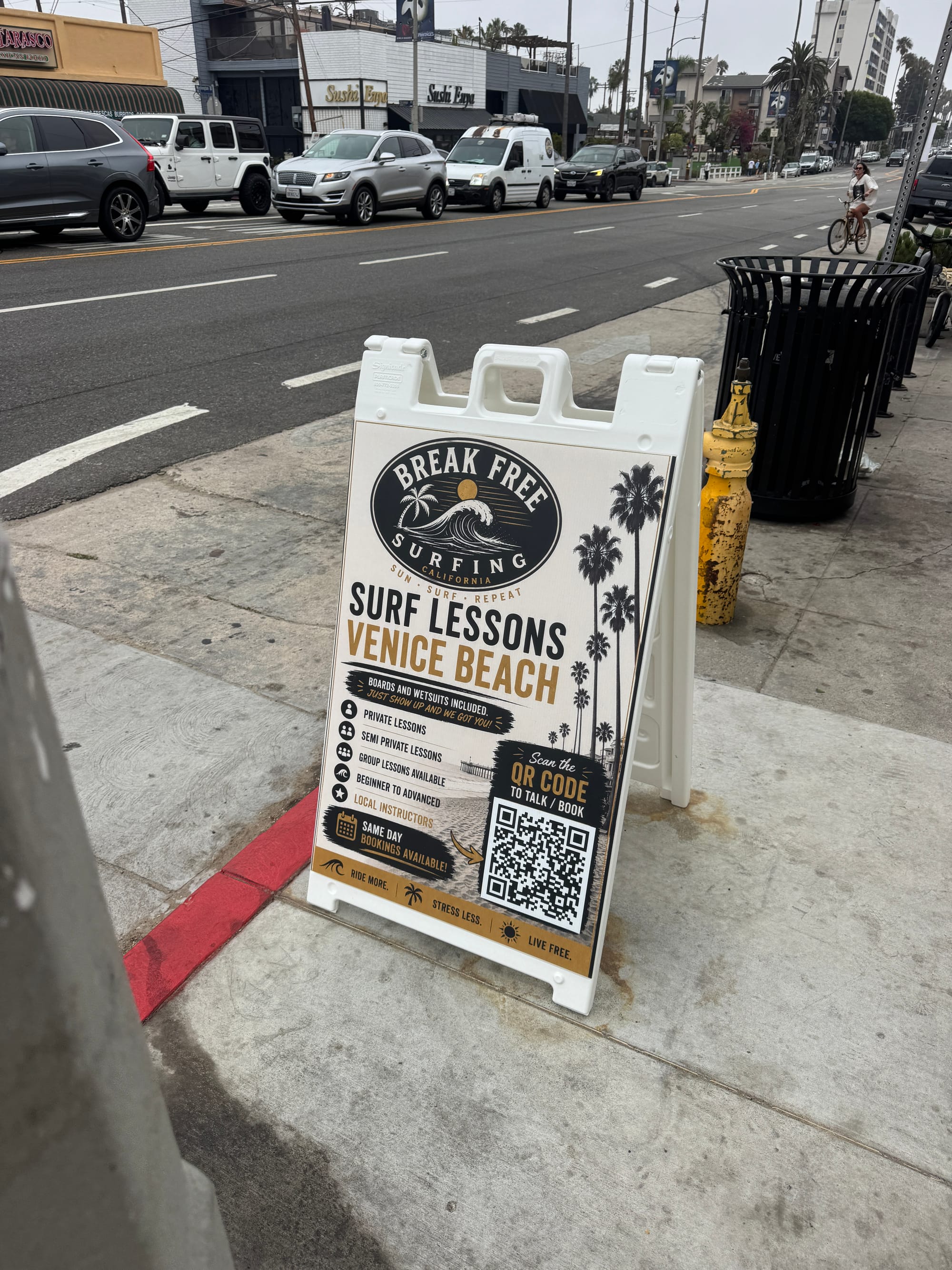
I am not sure, exactly, how many ChatGPT signs, flyers, or advertisements I had seen without noticing. But I do remember that once I began noticing them, I saw them everywhere. A few blocks from my house, on a display easel: “Break Free Surfing California: SURF LESSONS VENICE BEACH.” On Instagram, a going out of business closeout sale for a skateboard shop. On invites to parties from friends, Fourth of July barbecues being thrown by bars, concert posters. I saw ChatGPT-designed advertisements for drug deliveries in Berlin, World Cup parties in France, junk hauling services in South Carolina, and fundraisers in Texas. The scourge of low effort, stylistically indistinguishable AI-generated signs and flyers have flooded both social media and, increasingly, posters, billboards, and signs in real life: “So ain’t nobody gonna address this ChatGPT flyer pandemic we’re in?” one viral post on Threads read last month.
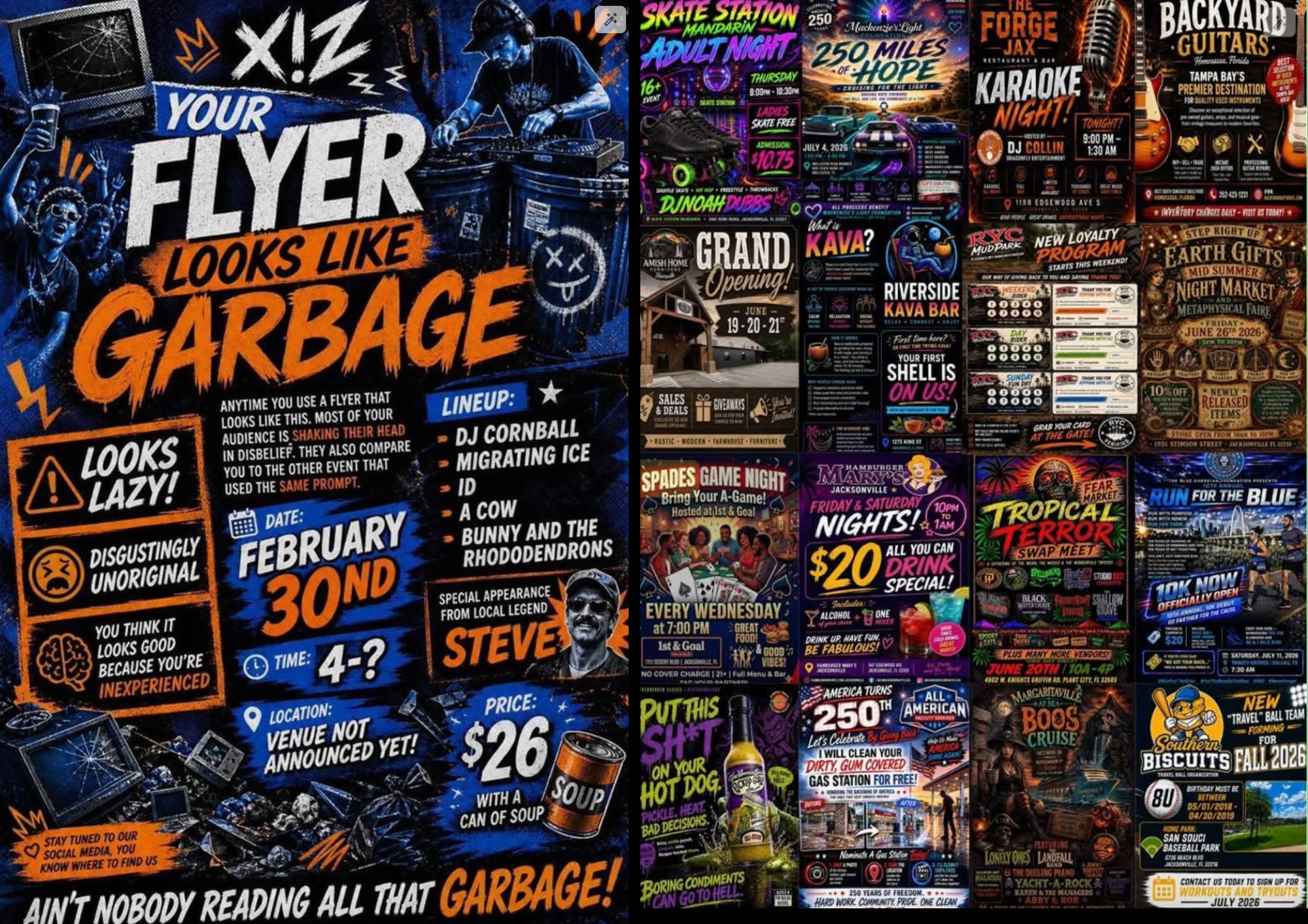
“YOUR FLYER LOOKS LIKE GARBAGE,” a viral ChatGPT-generated parody of the genre posted by Jill Oliver reads. “Hey if this is your flyer, I’m not going, I’m not donating, I’m not sharing. Don’t ask me.” The “ChatGPT flyer pandemic” has become a big topic of conversation among graphic designers, musicians, bars, and small business owners who care about design and showing that they’ve put effort into something.
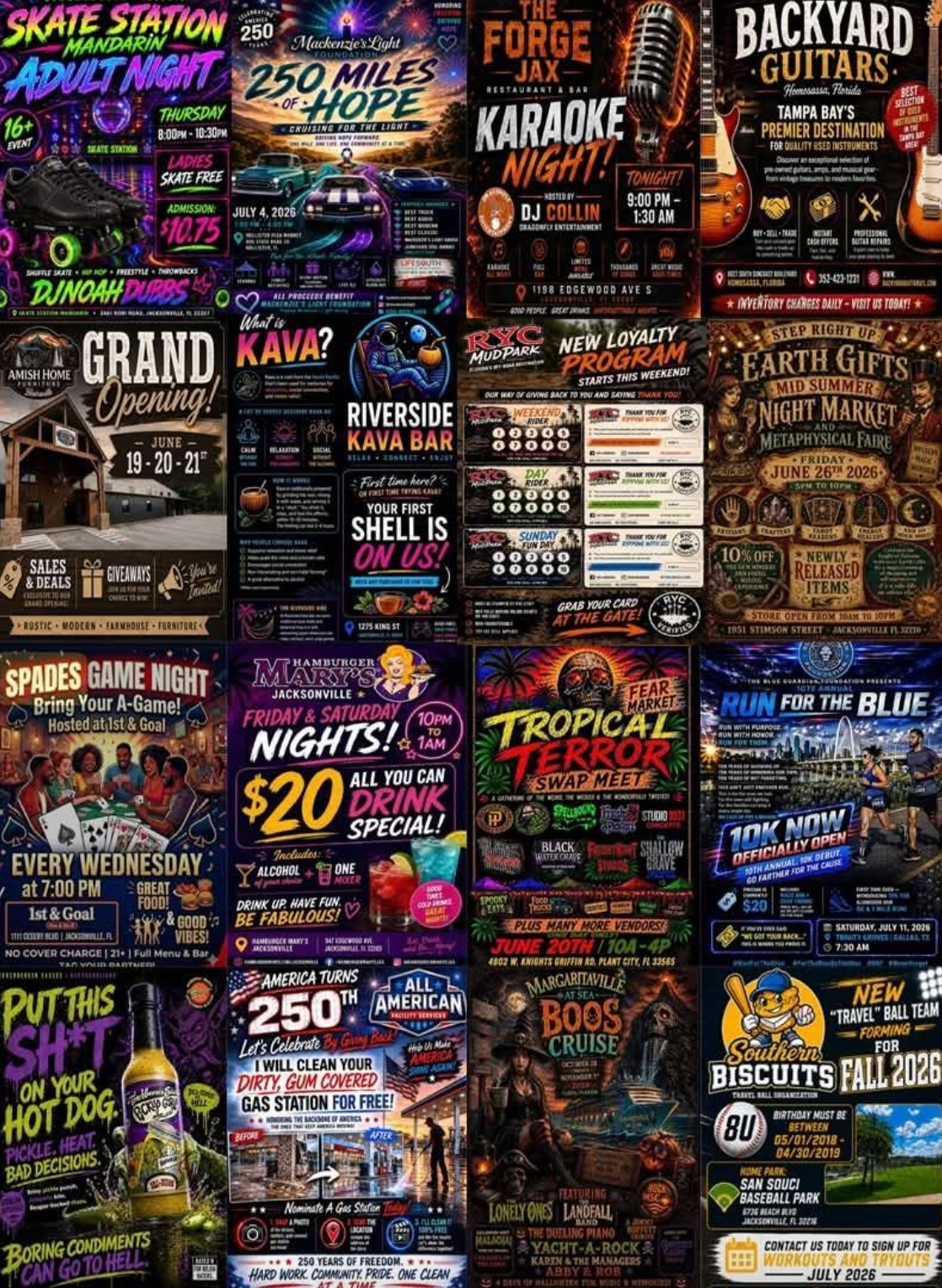
Once you notice a ChatGPT flyer, you will see them everywhere if you keep your eyes open. The art of the format is basically big, flashy bright text on dark background and an AI-generated or AI-altered image. There is almost universally a little box of generic icons in a bulleted list vaguely tied to whatever event or business it’s advertising, lines coming off of the text to emphasize whatever it’s saying, and either bolded words or underlined text and tons of arrows and checkmarks haphazardly strewn throughout. It is easier to just show you what they look like than describe it, because they all look basically the same: