
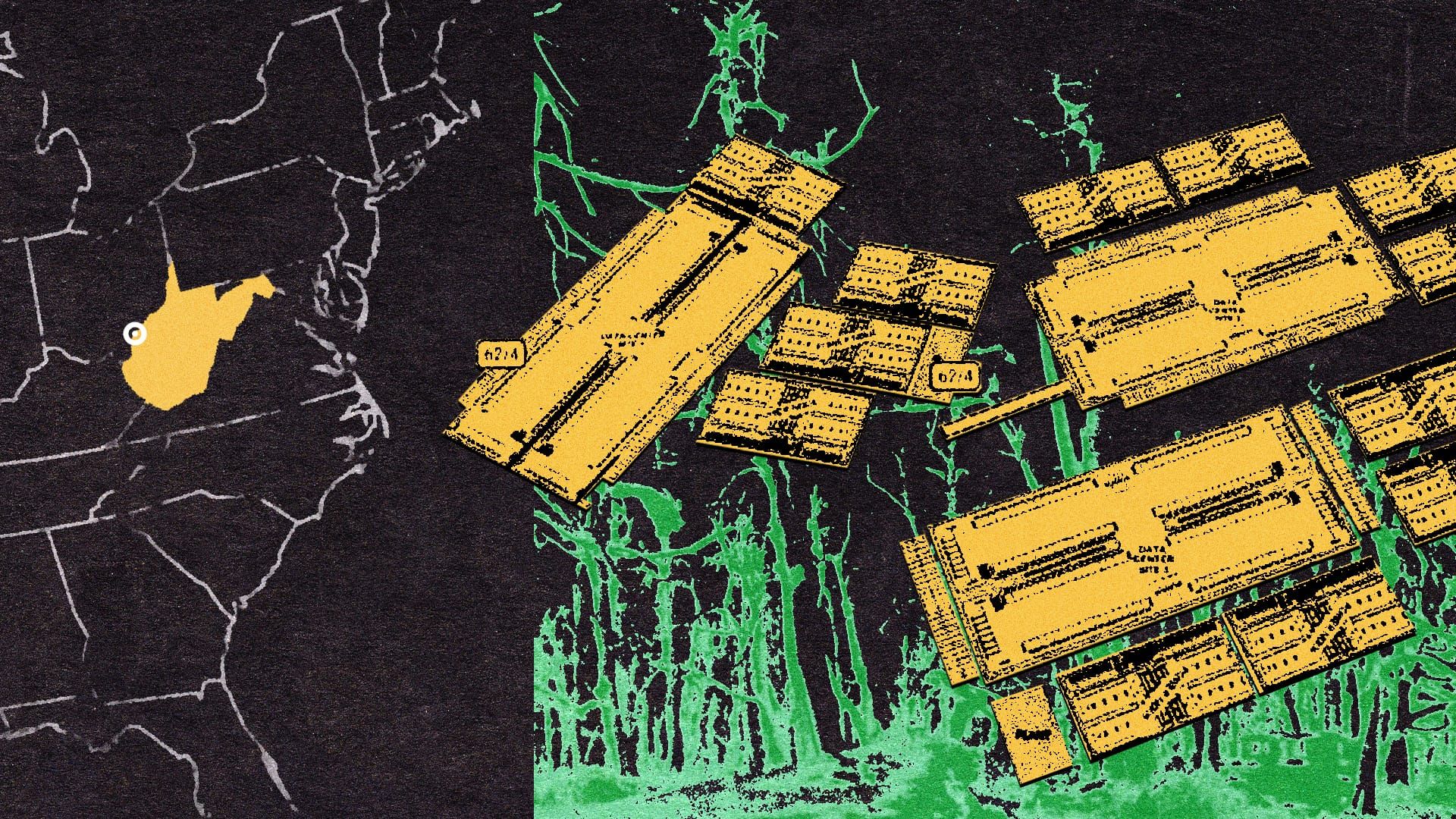
Near the bank of the Ohio River, a historic American chestnut grove in Mason County, West Virginia has become the epicenter of a fight against a planned 2,250 acre data center campus. Plans for the UK-based startup Nscale’s Monarch Compute Campus, with clients including Anthropic, Nvidia and Microsoft, encompass the former Clements State Nursery and the American chestnut trees still growing there.
For thousands of years, the American chestnut tree was a staple of life. Its natural range spanned hundreds of millions of acres from Maine to Mississippi, centuries before those names existed. As many as four billion trees provided a hearty nut crop for humans and provided miraculously rot-resistant lumber for railroad ties and housing. It sustained black bears as they prepared to hibernate, fed white-tailed deer and turkey, and shed nutrient-dense leaves. The largest American chestnut trees once grew 100 feet tall and 13 feet wide and represented one-fourth of all hardwoods; a squirrel could scamper along their branches from New England to Georgia without touching the ground, as an old saying goes.
In 1904, a forester at the Bronx zoo noticed something alarming among their American chestnuts: The trees were dying en masse, struck by a mysterious blight. Within 40 years, that blight — thought to be brought to America on Asian chestnut trees — wiped out the tree’s population to near-extinction. Since then, conservationists have worked to restore American Chestnut trees and breed blight-resistant specimens. Typically, threats to groves include pests, climate change, and the fungus that destroyed their ancestors. Today, however, a new threat has entered the picture: data centers.