
America, it’s time to refamiliarize yourself with Ring.
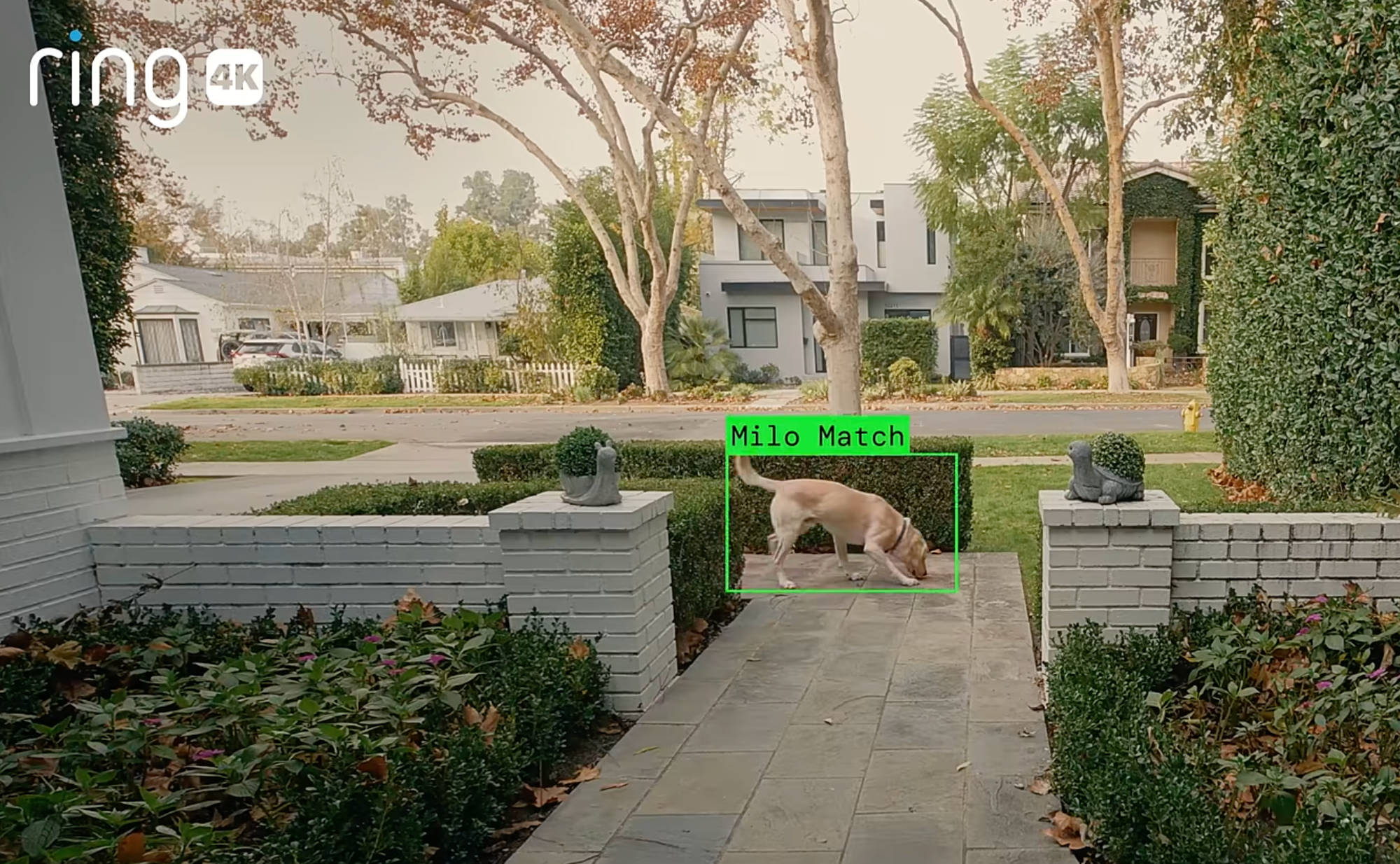
At Sunday’s Super Bowl, Ring advertised “Search Party,” a cute, horrifyingly dystopian feature nominally designed to turn all of the Ring cameras in a neighborhood into a dragnet that uses AI to look for a lost dog: “One post of a dog’s photo in the Ring app starts outdoor cameras looking for a match,” Ring founder Jamie Siminoff said in the Super Bowl commercial. “Search Party from Ring uses AI to help families find lost dogs.” Onscreen, an AI-powered box forms around a missing dog: “Milo Match,” it says. “Since launch, more than a dog a day has been reunited with their family. Be a hero in your neighborhood with Search Party. Available to everyone for free right now.”
It does not take an imagination of any sort to envision this being tweaked to work against suspected criminals, undocumented immigrants, or others deemed ‘suspicious’ by people in the neighborhood. Many of these use cases are how Ring has been used by people on its dystopian “Neighbors” app for years. Ring rose to prominence as a piece of package theft prevention tech owned by Amazon and by forming partnerships with local police around the country, asking them to shill their doorbell cameras to people in their neighborhoods in return for a system that allowed police to request footage from individual users without a warrant.
Chris Gilliard, a privacy expert and author of the upcoming book Luxury Surveillance, told 404 Media these features and its Super Bowl ad are “a clumsy attempt by Ring to put a cuddly face on a rather dystopian reality: widespread networked surveillance by a company that has cozy relationships with law enforcement and other equally invasive surveillance companies.”
Unlike, say, data analytics giant Palantir or some other high-profile surveillance companies, Ring is a surveillance network that homeowners have by and large deployed themselves, powered by fear mongering against our neighbors and unfettered consumerism.
After a lot of criticism in the late 2010s over its police contracts and its terrible security settings that resulted in hackers breaking into a series of indoor Ring cameras to terrorize children and families, Ring somehow found a way to more or less fly under the radar the last few years as a critical part of our ever-expanding surveillance state. It did this by scaling back police partnerships that were so critical to its growth but that received lots of scrutiny from journalists and privacy advocates. Siminoff left Ring in 2023, but returned last year; in his absence, Ring explicitly sought to take on a softer tone by branding itself as more or less as a device that could be used to film viral moments on people’s porches. It turned its owners into mini cops who would complain about delivery people who didn’t drop a package in the correct spot; who became hyperaware of the comings and goings of their friends, spouses, and children, or who might catch a potentially sharable moment when someone slipped on an icy porch or whatever. Part of this strategy included creating a short-lived reality TV show called Ring Nation, which consisted of precious little moments filmed through Ring cameras.